Watch on your phone in the Doxzilla appOpen the app
Doxzilla Learning
The film ends. The conversation begins.
Children who learn to think today will build Thailand tomorrow. For ages 3 to 18, starting at home. Schools have their own plan.
Know the Unknown. Imagine What's Next.
Every film has five steps: Watch, Think, Talk, Present, Reflect. The last step puts the screen down and says it out loud.
Ask your child one question, then listen. Ready to start tonight, at home.
Sign up at doxzilla.com with a credit or debit card and we charge the plan you choose immediately: ฿79 a month or ฿790 a year if you subscribe by 31 December 2026, and that price does not rise until we give you advance notice. From 1 January 2027 it is ฿149 a month or ฿1,490 a year. Prices include VAT. Your plan renews automatically each month or year until you cancel. Cancel any time on your account page so the next period is not charged, and keep watching until the end of the period you have paid for. Subscription fees already charged are not refunded. The name on your card statement is Next Step, and a receipt is emailed to the address you signed up with.
Each age band has its own films, its own way in and questions that suit it.
Ages 3 to 5
Ages 6 to 8
Ages 9 to 11
Ages 12 to 14
Ages 15 to 18
Children choose from what they have seen
A child who has seen a handful of jobs can imagine a handful of futures. A documentary shows a hundred kinds of work without leaving the sofa.
Let a child see enough, and they will choose.
Once a child has seen it, imagination can build on it. A child with something they want to be or do may find their own reason to work hard at school. The grown-up's part is to watch and talk together.
"At home" means parents, grandparents or anyone who looks after the child.
Start where your child is
Age is only a starting point. Children of the same age are ready at different times. Pick the row closest to your child.
Age
Children this age often
How you can help
3 to 5
Point, name the animals, ask "why" again and again. Retell in a few short sentences. Watch the same film many times. Enjoys short sittings.
Sit beside them every time. Answer "why" in a sentence. Ask one question and wait. They can wander off and come back. Let them say it in their own way.
6 to 8
Retell a story with a beginning, middle and end. Compare two things. Start to ask "is it true?". Love being the one who knows.
Stay close. Let them choose the film and lead. Celebrate what they noticed and let small facts wait.
9 to 11
Wonder whether it is true. Ask who is telling the story. Argue with a documentary. Better at telling opinion from fact.
Listen more than you ask. Ask when they open the door, then ask why they think so, with real curiosity. If they would rather not tell you, they can tell a friend or a sibling.
12 to 14
Care a lot what friends think. Shy easily. Want to choose for themselves. Dislike anything that feels childish. Enjoy arguing and questioning.
Let them pick the film. Hear them out before you speak. Invite them to share one to one or in a small group, and enjoy their own pace. If they go quiet, give them time.
15 to 18
Working out who they are and what they want to do. Want to be heard. See several sides and weigh evidence. Short of time, so they may ask "why watch this?".
Talk as equals. Hear a different view without rushing to argue. Let them set their own time. Ask what caught their interest, and what they would like to see next.
Pick the row closest to your child. A child of 7 who still likes naming animals can start with the 3 to 5 row. A child of 13 who does not want to talk can start with Watch alone.
Doxzilla Cartoon
Cartoons worth talking about
Many children begin with a story, so we keep cartoons alongside the documentaries. Every series gives them something to think about afterwards. When an episode ends, parents can ask one question, just as they would after a documentary.
Cartoons for ages 3–12. Included in your membership.
Ages 3–5
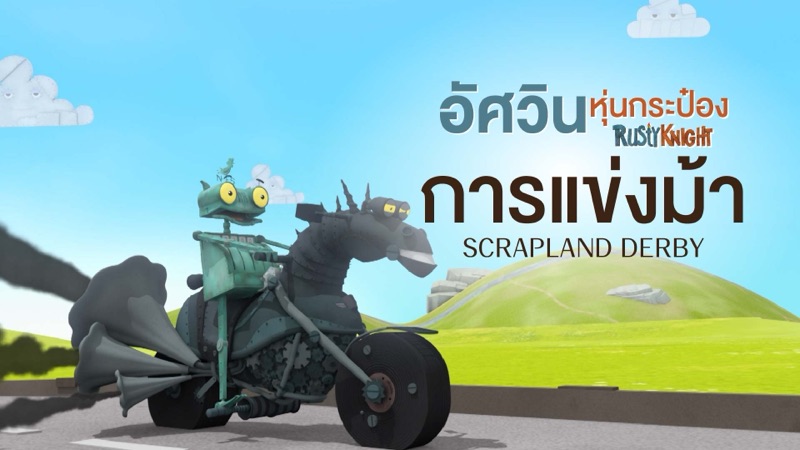
Rusty Knight (อัศวินหุ่นกระป๋อง)
15 minutes each
Gets them thinking about: responsibility, honesty, teamwork, problem solving
Ask after watching: “Which moment made you want to step in and help? What would you have done?”
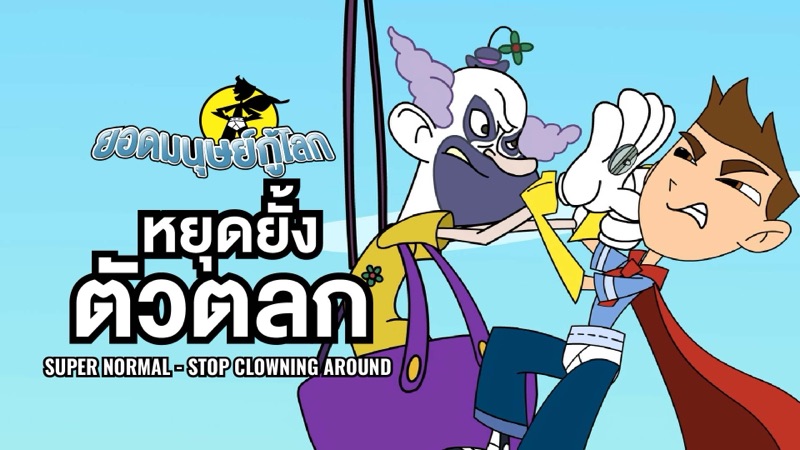
Super Normal (ยอดมนุษย์กู้โลก)
15 minutes each
Gets them thinking about: responsibility, helping others, problem solving
Ask after watching: “Who needed help in this story? What are some ways we could help them?”
Ages 6–12
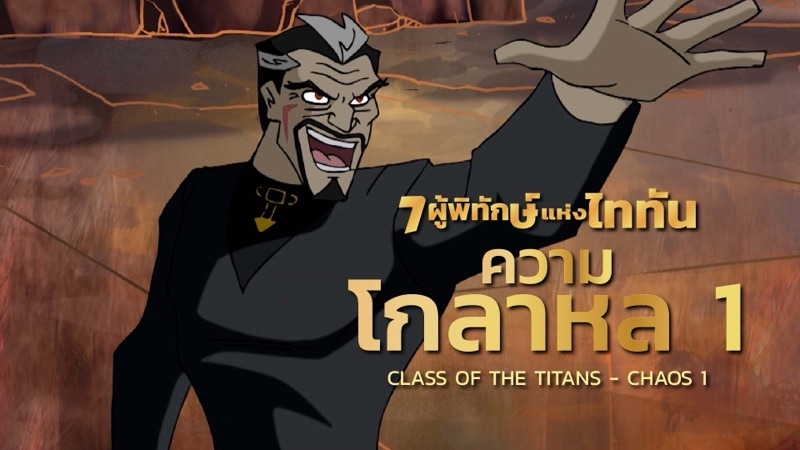
Class of the Titans (7 ผู้พิทักษ์แห่งไททัน)
30 minutes each
Gets them thinking about: Greek myths, courage, friendship, good character
Ask after watching: “Who needed the most courage in this episode? Would you have done the same, and why?”
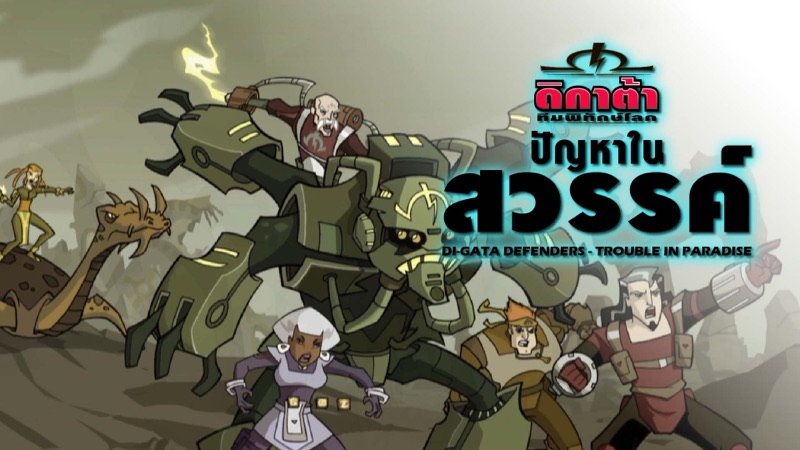
Di-Gata Defenders (ดิกาต้า ทีมพิทักษ์โลก)
30 minutes each
Gets them thinking about: teamwork, friendship, fairness, sacrifice
Ask after watching: “What did someone give up for the team in this episode? Would you have chosen the same?”
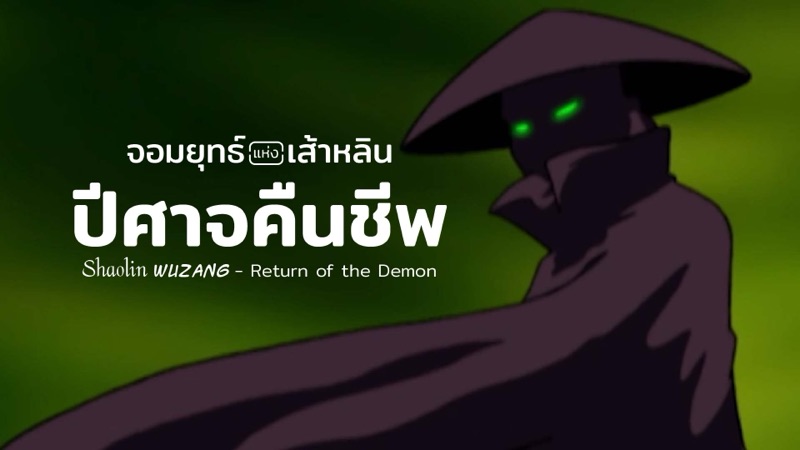
Shaolin Wuzang (จอมยุทธ์แห่งเส้าหลิน)
30 minutes each
Gets them thinking about: courage, teamwork, balance between body and mind
Ask after watching: “Was there a moment when a character had to stay calm before acting? What would you have done?”
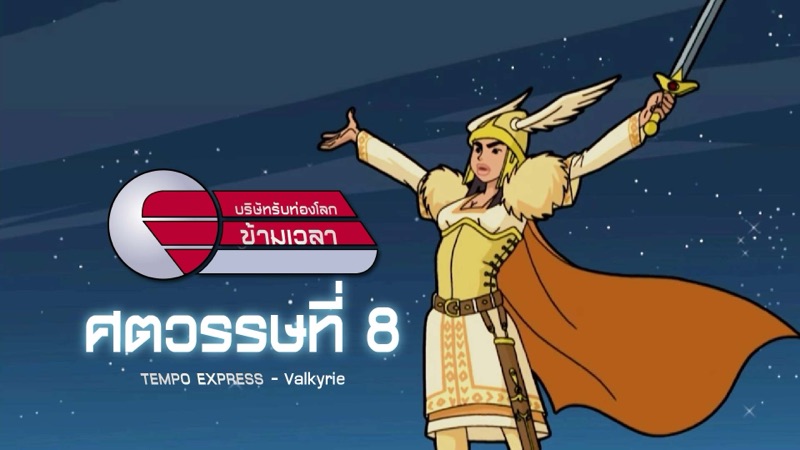
Tempo Express (บริษัทรับท่องโลกข้ามเวลา)
30 minutes each
Gets them thinking about: world history, teamwork, problem solving, ethics
Ask after watching: “If you could really be there in that time, what would you most want to see? What would be the hardest part?”
Skinner Boys (ผู้พิทักษ์ความลับที่หายไป)
30 minutes each
Gets them thinking about: teamwork, friendship, problem solving
Ask after watching: “What is each person on the team good at? What would happen if one of them were missing?”
Watch, Think, Talk, Present, Reflect
At home it takes as long as the film. In class it takes about 20 minutes after it.
1Watch
At home
Your child picks a film and watches. Kindergarten children should watch with someone at home; older children can watch with you or on their own.
At school
The teacher picks a film for the age group and the whole class watches together.
2Think
At home
When the film ends, two or three questions appear. Your child takes their time before answering.
At school
The teacher reads one question aloud. Everyone thinks in silence. There is no right answer.
3Talk
At home
Ask one question, then listen to the end. Do not say right or wrong.
At school
Children turn to the person next to them and take half a minute each. The whole room talks at once. The teacher listens in on a few pairs.
4Present
At home
Your child tells it back in their own way. Speaking, drawing, pointing or acting all count.
At school
Anyone who wants to share with the class can. Anyone who would rather draw or write can do that instead.
5Reflect
At home
Your child notes what they took from it today. Drawing or writing, no marks.
At school
Each child writes or draws one line in their own notebook. No one marks it. No homework.
Every step has another way in
Draw instead of write.
Record a voice note instead of speaking in front of people.
Point, act or answer with a gesture.
Talk, tell and reflect in any language you speak at home.
Watch in short stretches. A film does not have to finish in one sitting.
You do not have to tell us anything about your child. No paperwork.
One film. Many things practised.
AI can find an answer in seconds. Thinking it through, imagining another way and hearing someone out to the end still have to be practised by the child. One film, then a conversation, gives that practice. Here are three examples.
Analysis
Your child can say what they saw that made them think it, and ask who is telling the story.
Creativity
Your child tries another way, different from the one in the film.
Understanding feelings and getting on with others
Your child knows how they feel, hears friends out and helps others understand them.
Every film is checked by people before it goes into the library
None of our 3,000+ films goes into the library automatically. Our team watches the videos, checks for unsuitable images, and an expert reviews the content before every film goes in.
Four standards from the Amornphat Method
Curated. Someone chose each film for children to watch, so you do not have to search the whole world yourself.
Age classified. Each film says what age it suits, and carries a label for what to know before watching.
Fact checked. People review the content before it goes into the library.
Trustworthy. Behind it is Next Step, the team behind Samruajlok since 1988.
Three steps to find the rhythm that fits your home.
Tonight, let your child pick one film and sit beside them. Ready to start tonight.
Midweek, ask one question after the film, such as "What did you see?" Then wait. A short answer, a drawing, a point or no answer yet are all fine.
By the weekend, notice which evening, which time and who was sitting there when your child was most interested. Keep that rhythm.
Included in your membership
Doxzilla Learning is part of your Doxzilla membership. There is nothing extra to pay.
Subscribe by 31 December 2026: ฿79 a month, or ฿790 a year. From 1 January 2027: ฿149 a month, or ฿1,490 a year. Prices include VAT. Pay for 10 months of the yearly plan and use all 12. The annual plan and the ฿79 price are available only when you sign up at doxzilla.com (the ฿79 price is for those who subscribe by 31 December 2026). In the iPhone or Android app you can subscribe monthly at the full price, charged from the day you sign up.
One account. Sign in on up to five devices. One screen at a time.
Sign up at doxzilla.com with a credit or debit card and we charge the plan you choose immediately: ฿79 a month or ฿790 a year if you subscribe by 31 December 2026, and that price does not rise until we give you advance notice. From 1 January 2027 it is ฿149 a month or ฿1,490 a year. Prices include VAT. Your plan renews automatically each month or year until you cancel. Cancel any time on your account page so the next period is not charged, and keep watching until the end of the period you have paid for. Subscription fees already charged are not refunded. The name on your card statement is Next Step, and a receipt is emailed to the address you signed up with.
Questions
Does this include the regular Doxzilla library?
Yes. One membership covers all the documentaries and Doxzilla Learning. There is no second account and no second bill.
Is Doxzilla Learning charged separately?
No. Doxzilla Learning is included in your Doxzilla membership. Sign up at doxzilla.com with a credit or debit card and we charge the plan you choose immediately. It renews automatically until you cancel.
How do I cancel?
Any time. Sign in at doxzilla.com, select My Account, then Subscription, then Cancel subscription. You keep watching until the end of the period you have paid for, and you are not charged again. A period already charged is not refunded. All ways to cancel (Thai page)
Can I get a refund?
Doxzilla does not refund subscription fees already charged, whether you change your mind or cancel part-way through a period. Before you subscribe, the checkout page shows the plan and the amount that will be charged. What you can do is cancel any time at My Account, then Subscription, so the next period is not charged, and keep watching until the end of the period you have paid for. If we charge you in error, for example twice or after you cancelled, message LINE @doxzilla and we will check and refund the amount charged wrongly. If you subscribed in an app, ask Apple or Google for a refund under that store's rules.
Which ages is it for?
Ages 3 to 18.
How is this different from just playing a documentary?
Playing a documentary ends when the film ends. Here there are four more steps: think, talk, present and reflect. The films are grouped by age for you.
What if my child does not want to talk, or does not answer?
That is fine. They can speak, draw, point, write or act. They can answer in any language you speak at home. If they do not answer today, skip it and try again tomorrow.
Why a child should watch a documentary a day, and how to get the talking going. Free to read at amornphat.com. It works with documentaries from anywhere.
Doxzilla is recognised by UNESCO for its educational content.
Start tonight. Ask one question. Listen.
Sign up at doxzilla.com with a credit or debit card and we charge the plan you choose immediately: ฿79 a month or ฿790 a year if you subscribe by 31 December 2026, and that price does not rise until we give you advance notice. From 1 January 2027 it is ฿149 a month or ฿1,490 a year. Prices include VAT. Your plan renews automatically each month or year until you cancel. Cancel any time on your account page so the next period is not charged, and keep watching until the end of the period you have paid for. Subscription fees already charged are not refunded. The name on your card statement is Next Step, and a receipt is emailed to the address you signed up with.